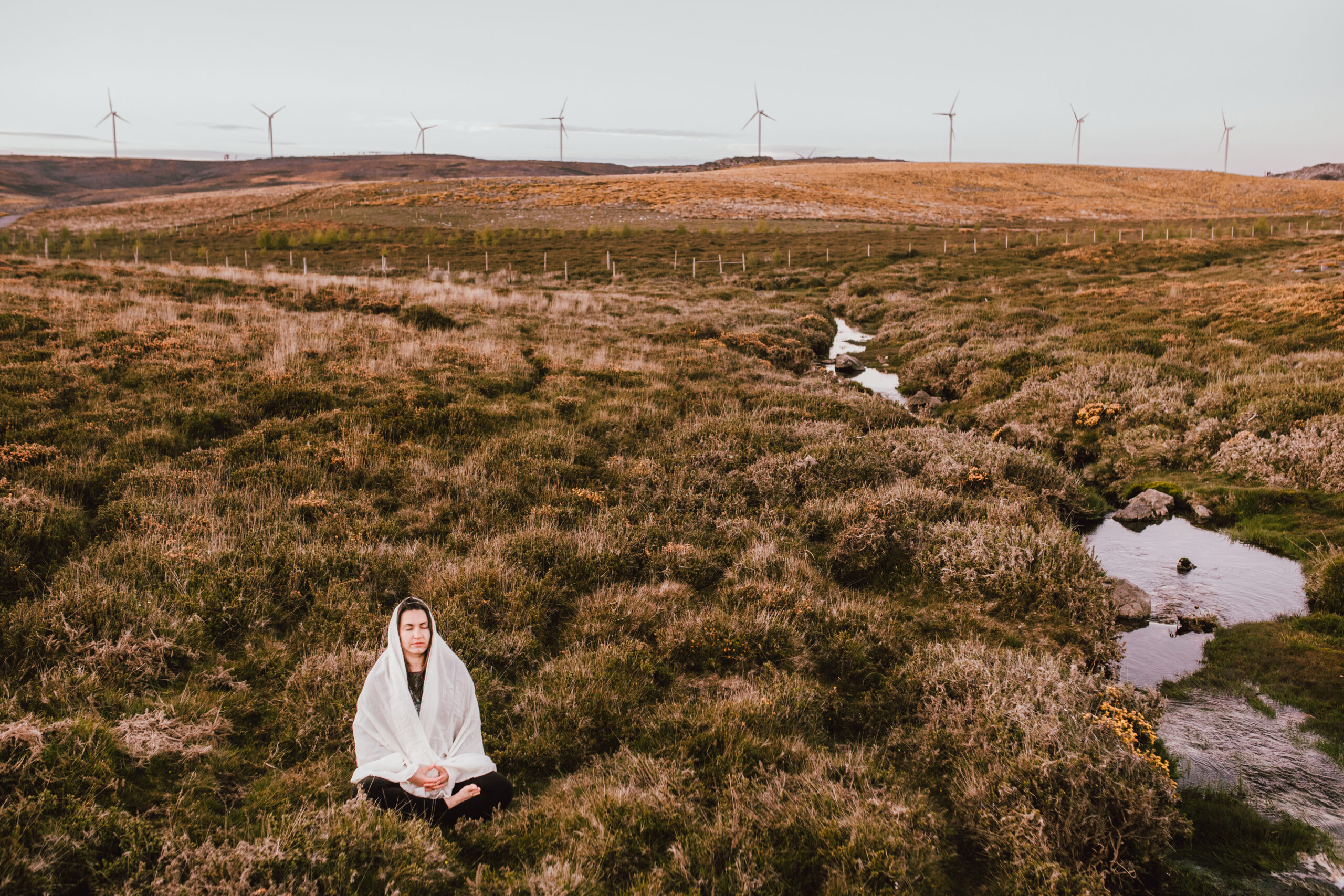
What truly moves us towards practice? The question is not only whether we practice, but from where we practice.
The same asana, pranayama, kriya, mantra, or meditation may arise from different movements of consciousness.
One movement is towards becoming. Becoming more knowledgeable, more experienced, more advanced, more recognised among peers and public, etc.
The ahamkara can appropriate even the spiritual path, turning sadhana into another project of identity, where thoughts like “I know”, I am advanced”, or “I am different”, without vigilance, can easily arise and escalate.
The objects have become subtler, but the movement of consciousness remains the same, towards acquisition, and that might lead to a sense of self-importance and entitlement.
The other movement is not towards embellishing the self, but towards seeing through it.
This is where viveka becomes essential. The discernment between what is changing and what is Real; between the identities we inhabit and the awareness in which they arise.
Then practice begins to ask different questions: “what am I still holding?”; “what am I still trying to prove?”; “what remains when I no longer need to become someone?”
Perhaps this is where the deeper meaning of integrity reveals itself. Integrity is not an image of purity. It is the quiet absence of division between what we see, what we know, and how we live.
When insight does not become embodiment, spirituality can remain another form of self-image. But when understanding enters life, something begins to simplify.
There is less need to be important. Less need to possess. Less need to be recognised. Less distance between inner truth and outer action.
And here svadharma becomes intimate. To live one’s svadharma is not to magnify the individual self, but to participate consciously in the order of life, without comparison, without appropriation, without needing one’s path to be greater than another’s.
There is a profound simplicity in this: to act fully, yet without making action an identity, to offer one’s gifts without possessing them, to fulfil one’s responsibilities without turning them into importance, to love without needing to own.
Sadhana becomes a process of removing what obscures what is already here. Moving us from importance towards presence, from entitlement towards responsibility, from possession towards freedom, from becoming towards Being.
And perhaps we stop asking: “how far have I progressed?”; and start enquiring: “is my practice making me more transparent to what is Real?”
A Contemplation
These two directions are, maybe, not as distant as they first appear. They may live within the same practitioner, sometimes even within the same practice.
There are moments when we practice from the quiet longing to know what is Real, and moments when, almost imperceptibly, the ahamkara enters and makes the path about itself.
There are moments when we release, and moments when we grasp. Moments when we become transparent, and moments when we begin to construct ourselves again.
This is not a failure of the path. It is the very field in which sadhana unfolds. The invitation is simply to see. To see without judgement, without creating another identity around what is seen. For in clear seeing, something begins to loosen.
And beneath these movements of consciousness, perhaps something quieter becomes perceptible, a simplicity that does not need to be constructed, an integrity that does not need to be proclaimed, a presence that does not need to become anything other than what it is.
So I will ask again, what drives you to practice?
Make it a movement of returning from the noise of becoming, into the silence of Being.